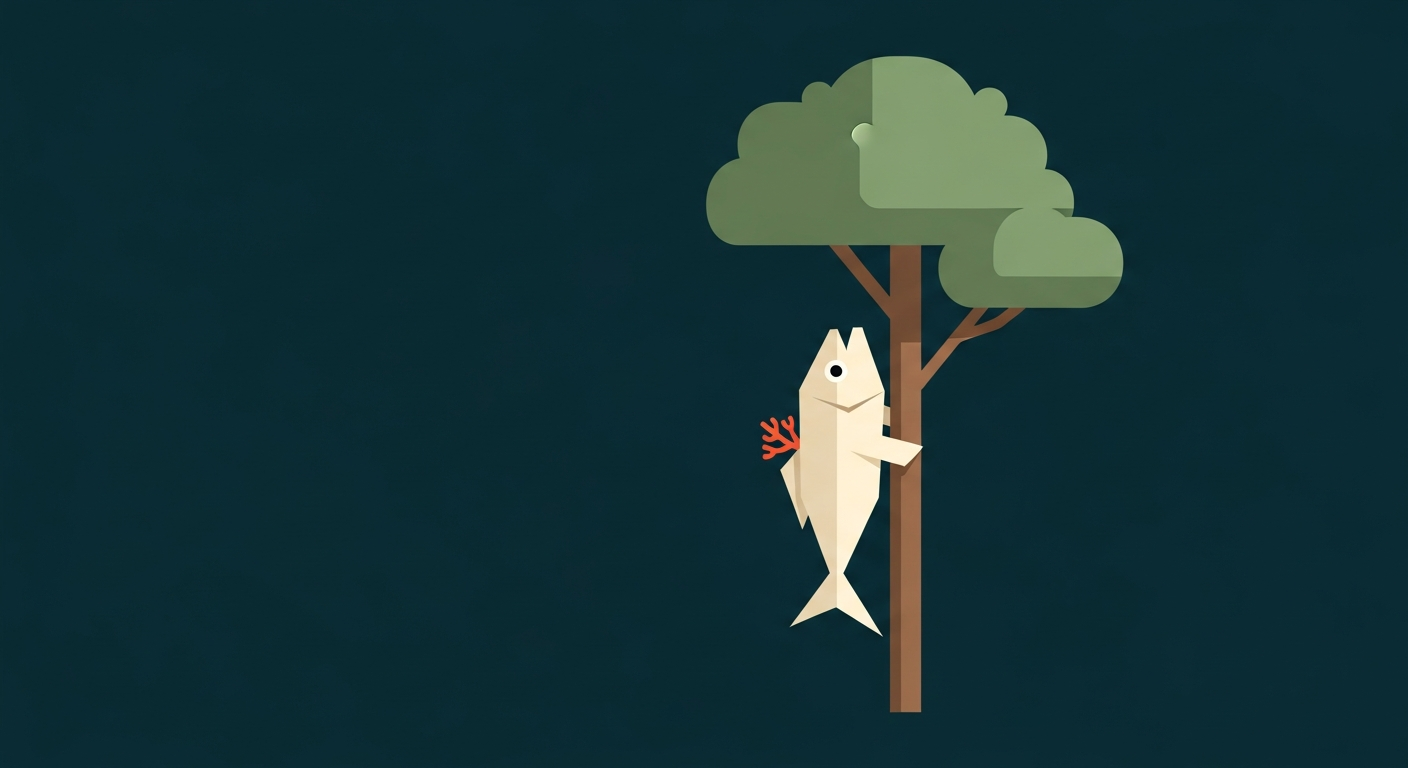

AI in healthcare is promising self-driving.
Reality is closer to a fast car with a very confident dashboard.
Exciting. Impressive. Useful in the right hands. But still very hands-on.
That is the dangerous middle.
The technology is now good enough to make people believe it can drive. It can answer questions, summarise notes, draft messages, triage requests, identify patterns and make a patient interaction feel smoother than the old way. It can remove real friction. It can save time. It can make care more accessible.
But it is not yet safe enough to be left alone in many of the places people are most tempted to deploy it.
This is the part of the conversation healthcare keeps skipping. We are talking about AI as if the choice is binary: either embrace it or resist it. Either be innovative or be old-fashioned. Either automate or fall behind.
That is not the real choice.
The real question is where the human needs to stay in the loop, and what kind of loop that is.
Because in healthcare, the transition period is where patients get hurt.
The Problem With Almost Autonomous
Self-driving cars taught us something useful about technology adoption. The dangerous stage is not the beginning, when nobody trusts the system. It is not the end, if the system truly becomes safer than a human across conditions. The dangerous stage is the middle, when the system works often enough that humans relax, but fails unpredictably enough that they are still responsible.
That is exactly where healthcare AI is now.
An AI receptionist can handle simple requests. Until the simple request is not simple.
An AI chatbot can sound empathetic. Until sounding empathetic makes the answer feel more trustworthy than it should.
An AI triage tool can route routine cases. Until a routine-looking case needs the context sitting in a clinician's head, not in the database.
An AI scribe can save a practitioner time. Until it misses the nuance that matters.
The risk is not that AI fails every time. If it failed every time, nobody would use it. The risk is that it succeeds just enough to earn trust it has not yet justified.
That creates a new kind of operational problem for clinics. The team still owns the outcome, but now they also have to supervise a system whose mistakes may be harder to spot than a human mistake.
This is the verification tax.
If an AI tool saves five minutes at 9pm but costs the team 25 minutes the next morning checking what it did, correcting the patient record, calming down the patient, and figuring out who approved what, that is not efficiency.
That is time loss disguised as automation.
Healthcare Is Not an Easy 80% Industry
The most dangerous phrase in healthcare AI is "it handles most cases."
Most cases are not the problem.
A patient with a standard booking request does not define the safety of the system. The system is defined by what happens when the patient is anxious, partially informed, medically complex, emotionally distressed, underage, post-operative, embarrassed, angry or simply hard to categorise.
In healthcare, "everyone else" is often just everyone.
This is why the easy 80% logic is so shaky. In a lower-stakes industry, automation can deal with routine cases and humans can mop up the exceptions. In a clinic, the exception may be the entire point of the interaction.
The patient does not know whether they are routine. That is why they are asking.
The clinic has to know.
That means context matters more than fluency. A polished answer without context can be worse than no answer, because it gives the patient confidence without giving them safety.
This is especially true in private healthcare, where the patient relationship can stretch over years. A clinic may have seen the same family for a decade. The value is not just in the appointment. It is in continuity, memory and trust. The patient expects the clinic to know who they are, what happened last time, why they are worried and what should happen next.
If AI sits in the middle of that relationship without the context to understand it, the clinic has not improved the experience. It has put a smart-sounding layer over a blind spot.
The Front Door Is Not the Whole House
There is a lot of energy around the idea of an AI front door for healthcare.
It is easy to see why. The current front door is often broken. Patients wait. Phones ring out. Booking is harder than it should be. People bounce between forms, portals, email addresses and phone menus. The admin layer around care is slow, expensive and frustrating.
So yes, the front door needs work.
But an AI front door only helps if it points people to the right place.
If the underlying data is fragmented, the workflow is unclear, the escalation rules are weak, and nobody owns the patient after the first answer, the front door becomes a shiny entrance to the same old maze.
That is the pattern I see across clinics. The problem is rarely one missing tool. It is the lack of a connected operating system around the patient.
The PMS holds one part of the truth. The inbox holds another. The call log holds another. WhatsApp holds another. The practitioner knows something important that never made it into a structured field. The front desk knows the patient is nervous because of the way they sounded on the phone. The finance system knows the payment friction. The marketing tool knows the original enquiry source.
Now drop an AI agent into one part of that system and ask it to act as if it understands the whole patient.
That is where the trouble starts.
The issue is not that AI is too weak. Sometimes the issue is that it is too confident on incomplete information.
The Job Is Not to Remove Humans
The best use of AI in clinics is not to replace the human layer. It is to make the human layer dramatically better.
That sounds less radical than "fully autonomous care", but it is much more useful.
AI should help the team see what they cannot currently see. Which patients are at risk of dropping out. Which cancellations need immediate follow-up. Which new enquiries have not booked. Which old patients are likely to re-engage. Which messages need a human response now, and which can be safely handled by a structured workflow.
That is real leverage.
It moves humans toward the work only humans should do: judgement, empathy, escalation, clinical nuance, commercial ownership and the relationship moments that create trust.
It moves machines toward the work machines are good at: reading, sorting, matching, summarising, routing, drafting, checking and remembering.
The mistake is asking machines to own the relationship while asking humans to audit the mess afterwards.
That is backwards.
In a good healthcare AI system, the machine does the preparation and the human owns the judgement. The patient gets speed without losing care. The clinic gets efficiency without losing accountability.
The Hidden Management Problem
Healthcare leaders often talk about AI as if it is mainly a technology decision.
It is not.
It is an operating model decision.
Who is allowed to approve the AI's recommendations? Who reviews exceptions? Who looks at the audit trail? Who changes the workflow when the AI exposes a broken process? Who owns the risk if the system escalates too much, or too little?
Most clinics do not have clear answers to those questions because most clinics do not have a clear owner for patient revenue, patient reactivation, patient communication or patient lifecycle management. The front desk is expected to do everything. The owner is too busy. The clinicians hold context in their heads. The PMS is treated as if it is a CRM. Then AI arrives and everyone assumes it will magically make the operating model coherent.
It will not.
AI does not fix accountability gaps. It exposes them.
If nobody owns the patient journey before automation, nobody owns it after automation. The difference is that now the clinic can make the mistake faster.
What Good Looks Like
Good healthcare AI starts smaller than people think.
It starts with a defined job.
Not "manage patients." Too broad.
Not "replace reception." Too risky.
Something like:
Identify patients with no next appointment after treatment and draft a context-aware follow-up for human review.
Or:
Summarise inbound messages by urgency and route anything ambiguous to a trained coordinator.
Or:
Reconcile patient identity across channels so the team can see the whole relationship before replying.
This is the unglamorous foundation. Clean data. Clear workflow. Tight guardrails. Human supervision. Audit trail. Escalation rules. A defined failure mode.
Only then should the system earn more responsibility.
Autonomy should be earned, not assumed.
The standard should not be "can this tool do the task?" The standard should be "can this tool be wrong safely?"
That is a harder question. It is also the one healthcare needs to ask.
The Better Future
I am optimistic about AI in healthcare because the current system is full of work that should not exist.
Patients should not wait days for simple answers. Front desks should not spend their lives copying information between systems. Clinicians should not rely on memory for patient context that could have been surfaced automatically. Clinic owners should not need five tools and a spreadsheet to understand what is happening to their patient body.
AI can help with all of that.
It can make healthcare feel more responsive. It can help clinics follow up with patients before they disappear. It can reduce staff burnout. It can help teams spend more time on human care and less time on administrative duct tape.
But only if we stop pretending that the technology is already self-driving.
Healthcare is in the dangerous middle.
That is not a reason to slow everything down. It is a reason to build the right guardrails now, while the habits are still forming.
The future is not AI-only.
The future is AI with expert human supervision. AI with clean data. AI with accountability. AI with a clear line between what can be automated, what can be drafted, and what must stay human.
Fully hands-off sounds great.
We are not there yet.