Scaling Oral Surgery to 54 Surgeons in Nine States
Trevor Maurer, CEO of OMS360, on building a fifty four surgeon oral surgery group across nine states, and why the first fix for a new practice is almost never more marketing.
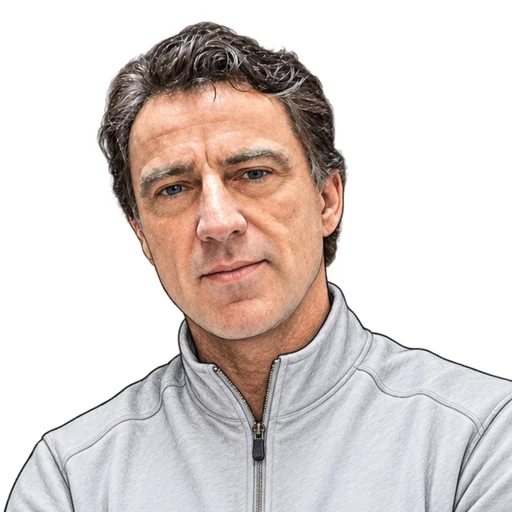
Trevor Maurer
“If it involves the heart, use a human. If it's all about efficiency, where you can, use AI.”— Trevor Maurer
Show notes
Trevor Maurer did not come to healthcare through a family of doctors. He grew up in a small town in Saskatchewan with, by his own account, little interest in college, went because he turned out to be better at American football than at hockey, and built a career through healthcare sales, multi-site healthcare management in Canada and the US, and a healthcare technology startup in Manhattan.
He is now CEO of OMS360, a single-specialty oral surgery group started four and a half years ago that partners with fifty four surgeons across nine states. What he likes about working with surgeons is that they are direct and evidence-based: when they do not understand something they ask, and when they will not do something they say so.
He also likes that oral surgery is usually the patient's last resort, since around ninety one percent of patients arrive on a referral from a general dentist and there is rarely another specialty to go to if the practice fails them.
Most of the conversation is about the patient's time rather than the practice's. More than sixty percent of patients are in pain and in a hurry, nobody actually wants to be there, and filling in the same form for the fourth time is the kind of thing they tell their dentist about afterwards.
Jared picks out two phrases he says he has not heard in nearly a hundred episodes: duplication of patient effort, and efficiency of patient time. Same-day surgery is the clearest expression of both.
Doing the consult and the procedure in one visit means about fifty eight minutes in the operatory instead of an hour and forty over two days, one trip instead of two half days off work, and it avoids the up to thirty percent of patients who have a consult and never come back for surgery.
Around thirty two percent of OMS360's procedures are now same day, with some practices above eighty percent. On the phones, AI picks up on the fifth ring rather than the first, because patients would rather talk to AI than to nobody, but a person still comes first. His rule: if it involves the heart, use a human; if it is about efficiency, use AI where you can.
When OMS360 partners with a new practice, the surgeon usually asks for more patients, and the first fix is usually something else. They build a scheduling template around the surgeon's best day, measured across people, quality, delivery and finance, with finance deliberately last.
Then they work on the phones: using call analysis from Patient Prism, they typically find twenty eight to thirty percent of calls going unanswered and bring that close to zero.
His framing is that every practice has either a demand problem or a capacity problem, and it is almost always capacity, which is why they usually find two or three years of patient volume before marketing is needed.
He describes a referral development manager who calls referring dentists to ask how co-managed cases went, surgeons who call every patient the night of their surgery, and why a practice with few Google reviews, and negative ones, is usually a practice that does not want to know.
He closes on adoption: he likes to be a fast follower, and Shore Capital Partners runs a central team that pressure tests AI vendors across its portfolio so each company does not have to do it alone.
Key takeaways
- Around ninety one percent of patients arrive on a referral from a general dentist, and if the oral surgeon fails them there is rarely another specialty to go to. Trevor treats being the patient's last resort as the reason the non-clinical experience matters so much.
- More than sixty percent of patients are in pain and in a hurry. Asking them to fill in the same form they already completed online, for the fourth time, is exactly what they will complain about to the dentist who referred them.
- Protect the patient's time, not just the practice's. Jared picks out two phrases he had not heard before in nearly a hundred episodes: duplication of patient effort, and efficiency of patient time.
- Same-day surgery means about fifty eight minutes in the operatory instead of an hour and forty over two visits, and one trip instead of two half days off work. It also avoids the up to thirty percent of patients who have a consult and never come back for the procedure.
- AI answers the phone on the fifth ring, not the first. Patients would rather speak to AI than to nobody, but a person comes first. His rule: if it involves the heart, use a human; if it is about efficiency, use AI where you can.
- A referral development manager calls referring dentists to ask how co-managed cases went. It surfaces problems the practice had no idea about, such as a rude front desk or treatment notes that never arrived, before the referrals quietly dry up.
- When a surgeon asks for more patients, the first fix is usually a scheduling template built around their best day, then the phones. Twenty eight to thirty percent of calls often go unanswered, and bringing that close to zero comes before any marketing.
- Every practice has either a demand problem or a capacity problem, and in his experience it is almost always capacity. That usually leaves two or three years of patient volume to capture before marketing is needed.
See how much revenue your clinic is leaking.
Coherent gives private clinics one patient relationship engine, recovering revenue lost at enquiry, recall and billing.