Stop trying to adopt AI. Start adopting it right for healthcare.
AI in private healthcare runs on different physics — clinical safety, patient trust, regulatory exposure. One day with the team running AI inside clinics today.
Most AI advisory in healthcare is theatre.
But the operational problem underneath it is real, scaling, and quietly expensive. Boards know it. Most leadership teams don't yet have a defensible plan for it.
The leakage
Patients drop off between enquiry and consult, between consult and treatment, between treatment and follow-up. The cracks are invisible on a dashboard. They compound to millions at scale.
The default fix isn't fixing it
Bigger groups instinctively hire more front-of-house. Each hire covers nine-to-five, one stage of the journey, no nights or weekends. Admin headcount climbs faster than revenue. The patient experience does not improve.
AI is the lever
Done right, it doesn't just speed up admin work — it changes which admin needs to exist at all. Done wrong, it adds to the noise. The difference is strategic clarity from people who've already shipped it.
For the people deciding AI in healthcare.
The bigger the group, the bigger the leakage — and the harder it is to see. A single-site clinic loses leads in hours. A twenty-site group loses them in plain sight, distributed across departments, spreadsheets and a front-of-house team that's already at capacity.
CEOs, MDs and operations directors at multi-site clinic groups. Directors of Digital Transformation at hospital groups and larger health enterprises. Anyone whose board has asked them to "have an AI strategy" without giving them the time, budget or operator-depth to build a defensible one.
Patient bookings
Every enquiry triaged. Every consult followed up. Every recall served on time. The top of the funnel stops leaking.
Operational efficiency
Five stages of leakage closed by one unified system — not five teams in five spreadsheets.
Headcount discipline
Stop scaling admin headcount linearly with site count. Make the existing team materially more effective.
The productivity wave
Peer groups are deploying AI now. The gap from getting this right compounds; getting it wrong is a one-time loss. Move with intention.
Decisions, not decks.
By the end of the day, you have the answer to where AI actually pays in your group — mapped, ranked, and built on a framework you keep using.
The leakage
Half of new enquiries don't get a response within 24 hours. Quality leads convert; the rest go cold or to a competitor.
Where AI pays
Instant triage, qualification and booking confirmation across web, voice, SMS and WhatsApp.
Where it doesn't
Complex clinical questions, sensitive cases, situations where a human voice is the actual product.
The diagnostic
Where AI actually pays in your group, mapped against your lifecycle. Honest about where it doesn't.
A decision framework
How to score any AI use case — impact, feasibility, regulatory risk, team readiness. Yours forever.
The priority order
The 3-5 plays that genuinely move your P&L. Ranked. The single highest-leverage one identified.
The playbook
Step-by-step blueprint for your top priority. Detailed enough that a competent team can ship it.
Four operators. Building AI in clinics today.
The whole Coherent senior team is in the room. Not associates. Not partners-of-partners. The people running the platform.

Leads Coherent. Has overseen AI deployments inside clinic groups across the UK, US and Canada. Opens the diagnostic, closes the decision.
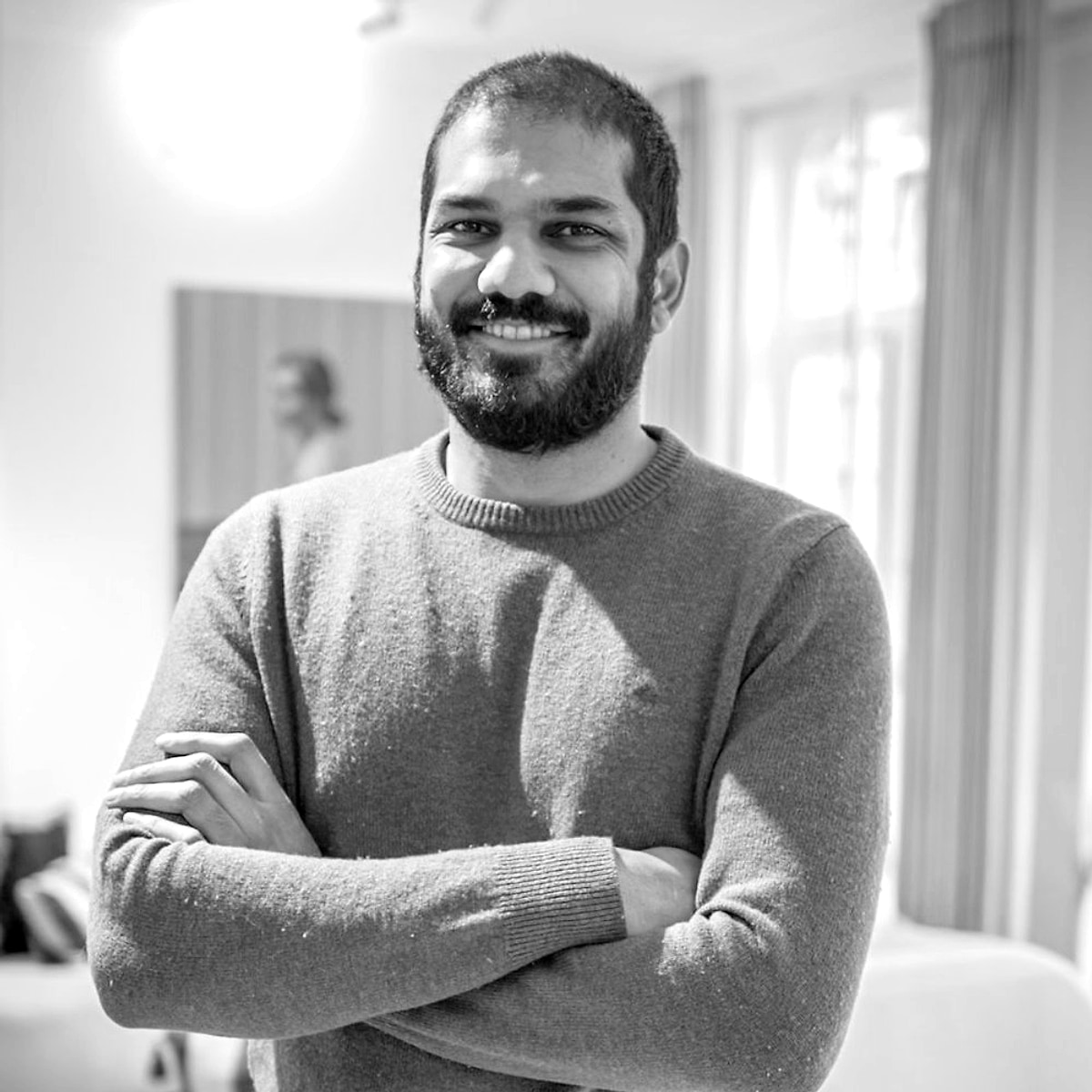
Built financial-grade systems where failure was not an option. Leads technical feasibility and risk-scoring.

A decade in healthtech — Elvie (two Red Dot Awards), Mindstep (Class 1 medical device), Numan. Cut her teeth running workshops at PwC. Leads prioritisation and the playbook.

Brings clinical judgement to every decision. What AI should do, what it shouldn't, what regulators will care about.
Pick the depth.
The Diagnostic
A sharp scan and a starting point.
- Top 3 leverage points surfaced
- Decision framework introduced
- Recommendation on where to start
The Strategy
Full diagnostic, prioritised plan, playbook for the top priority.
- Full diagnostic across the lifecycle
- Plays scored on impact, feasibility, risk
- Playbook for the top priority
- Clinical safety & governance position
- 30-day post-workshop check-in
Delivered on-site, at our London HQ, or remotely. Cohorts capped at eight senior people — the room only works small.
Diagnostic morning. Decision afternoon.
- 09:30 — 10:45 · Jared opens
Diagnostic
Where is patient revenue actually leaking? Where is staff time going? We map your group against the five-stage lifecycle using your data, not assumptions.
- 10:45 — 12:30 · Whole team
Signal vs noise
Voice agents. AI receptionists. Recall automation. Patient-facing chatbots. Honest positions on what's working in clinics today, what blows up, what the industry is two years away from getting right.
- 12:30 — 13:30 · Provided
Lunch
Provided. The conversation rarely stops.
- 13:30 — 15:00 · Saskia leads
Score & prioritise
Every opportunity surfaced in the morning gets scored on minutes saved, hours saved, revenue impact, regulatory exposure, team readiness. By the end you have a ranked list and a clear top priority.
- 15:00 — 16:00 · Bharat on feasibility
Playbook
Step-by-step blueprint for the top priority. Tools, data flows, owners, what good looks like, where it can break. Detailed enough to ship.
- 16:00 — 16:45 · Dr. Chinegwundoh leads
Clinical safety & governance
Patient consent, clinician-in-the-loop rules, GDPR, CQC posture. What you're happy to put in writing in front of staff and regulators.
- 16:45 — 17:00 · Jared closes
Decision
The priority is locked. The framework is yours. Owners are named. You leave with a clear next step before the day is over.
Operators, not consultants.
What you usually get
A generalist consultancy with a healthcare deck.
- Slides on “the AI opportunity”
- A workshop with sticky notes
- A 40-page report, then silence
- A six-month engagement, no shipped work
What you get here
The team shipping AI in clinics today.
- A diagnostic on your data
- A framework you reuse forever
- A priority order, ranked
- A playbook detailed enough to ship
Honest answers.
Particularly for you. Most digital transformation leaders are being asked to “have an AI strategy” without the time, budget or operator-depth to build one. This is the day you stop figuring it out alone — and walk into your next steering committee with a diagnostic, a framework, and a defensible priority order.
No. The day is run for senior decision-makers, not engineers. The output is strategic clarity and a playbook your team — or any vendor of your choosing — can pick up and execute against.
We've worked across Pabau, Dentally, Phorest, Cliniko, Salesforce Health Cloud, NextGen and a long list of in-house builds. The diagnostic starts with the stack you have.
Strongly yes. The clinical safety block is sharper with them in the room, and the priority order carries more weight when your CMO has signed off the approach in real time.
Three to eight senior people. Below three the conversation gets thin; above eight the room stops being a workshop. Eight is a hard ceiling.
Pricing depends on format, location and group size — shared on the intro call. Sized to fit a departmental decision rather than a procurement cycle.
One day. Real clarity. No theatre.
Twenty-minute intro call. We'll diagnose whether a workshop is the right shape for your group — or whether something else fits better.