What VCs See in Healthcare AI
A European venture investor explains why the AI tools that look tidiest on a clinic's shortlist are often the ones least likely to pay off, and what he looks for instead.
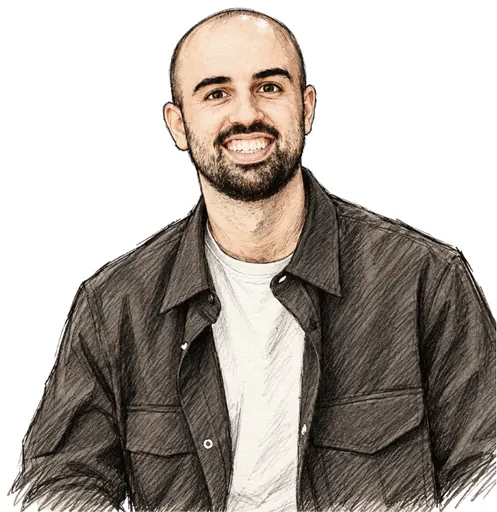
Pablo Perea
“As deep as you can get, the more ROI that you can get.”— Pablo Perea
Show notes
This is the first Business of a Clinic episode with an investor rather than an operator. Pablo Perea is a partner at GoHub Ventures, a Spanish early stage fund that decided around three years ago to put roughly 80 percent of its capital into digital health.
He describes that first year as tough, and the thesis has been rewritten every six to twelve months since. One early bet, the AI interpretation layer sitting on top of wearable data, was dropped outright once Oura and Whoop had claimed it, in his words either they were late to the party or it was no longer defensible.
What survived is a narrower list: the safety and compliance layer around AI in healthcare, operating efficiency inside private clinics, and tools on the payer side.
The centre of the conversation is a distinction clinic leaders rarely hear spelled out. Purely horizontal AI products look appealing because they serve every kind of practice, but Pablo puts the genuine overlap between clinic types at only thirty or forty percent, and once you move past patient intake into clinical work the similarity disappears.
Those tools tick a box early, then reveal hidden costs, usually someone dedicated to keeping the thing running, and the clinic never sees the return it bought. Going fully vertical solves defensibility but makes expansion across geographies and sub-specialties awkward, risking what he calls a Frankenstein product.
AI-enabled services, where a partner uses the technology to deliver a measurable outcome, tick both boxes, and the depth of that relationship is itself the moat.
Jared adds a live example from episode 56: a seventy to eighty site dental group that tried a general purpose AI receptionist, found too much fell through, then overcorrected into a tool so narrow it only worked in one lane.
The practical half of the episode is about how to judge a vendor when technology is not your day job. Pablo walks through the due diligence he actually runs: pattern matching roadmaps across the hundreds of companies he sees, speaking to a vendor's existing clients constantly to compare the short term view with the long term one, and leaning on technical and market advisors who have spent their careers on one problem.
Jared's takeaway for clinic leaders is the advisor point, since the best operators he meets assemble a micro tech advisory board from their own networks outside healthcare.
Both agree the unglamorous preparation decides the outcome: buyers arrive with scars from self-service tools that connected to a booking system but knew nothing about who, when, how or where to book, because nobody wrote the SOPs down.
Looking twelve months ahead, Pablo calls data readiness a no-brainer and says operating efficiency is ripe to invest in now, while the clinical side still waits on regulation and has no clear winner in sleep or mental health.
Key takeaways
- GoHub Ventures put roughly 80 percent of the fund into digital health about three years ago and revisits the thesis formally every six to twelve months, adding and dropping sectors as the market moves.
- The AI interpretation layer on wearable data was dropped from the thesis once Oura and Whoop owned the category, a decision Pablo frames as either being late to the party or holding something no longer defensible.
- Across different types of clinic, only about thirty or forty percent of what they do is genuinely similar, which is why purely horizontal AI tools struggle to deliver the return they promise.
- Horizontal tools often tick a box at the start and then surface hidden costs, typically a staff member dedicated to running the system, which cancels out the efficiency the clinic was buying.
- AI-enabled services combine the technology with a delivered outcome, and the depth of that relationship inside the clinic is what makes the return compound rather than a one-off saving.
- A clinic can borrow an investor's due diligence habits: pattern match roadmaps across vendors, speak to existing clients about both the first weeks and the second year, and bring in a technical advisor rather than deciding alone.
- Data readiness is the safest twelve month bet, operating efficiency such as patient intake and triage is ripe now, and the clinical side remains gated by regulation with no clear winner yet in sleep or mental health.
See how much revenue your clinic is leaking.
Coherent gives private clinics one patient relationship engine, recovering revenue lost at enquiry, recall and billing.