What 4,000 Dental Tech Companies Taught a Dentist Turned VC
Dr Jeremy Krell, a dentist who scaled ten practices and now runs a venture fund dedicated to dental technology, on how clinics should choose software, why the jar has to be filled with rocks first, and why the one thing that matters most is still people.
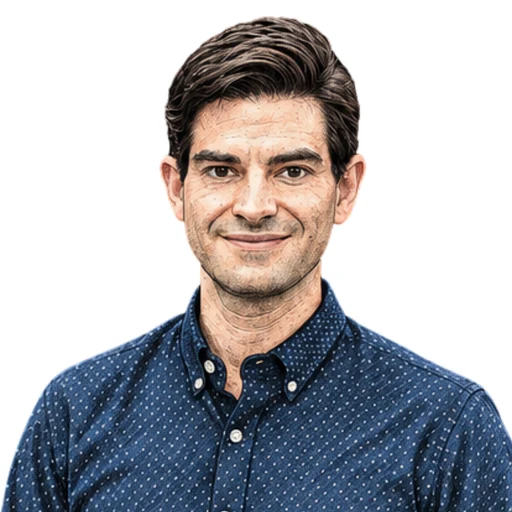
Dr Jeremy Krell
“Medicine, dentistry, they are people businesses. Whether or not we have robotics, AI, other things helping us, they are people businesses first.”— Dr Jeremy Krell
Show notes
Dr Jeremy Krell has worn more hats than most guests on the show. He practised general dentistry for close to a decade and scaled ten practices before exiting, then moved into startups: a department at Oscar Health, the direct-to-professional channel at quip, and the role of chief marketing and dental officer at Simplifeye.
Around six or seven years ago he founded Revere Partners, which he describes as the first venture capital fund to focus solely on dental technology.
He says two things have driven him at every stage: wanting to help people, and real dissatisfaction with how things worked. As a clinician he found choosing technology hard, and nobody taught him how to invest. As a startup operator he watched dental tech get told it was too small. As a fund manager he found the back office of running a fund so thin that Revere built its own.
On buying technology, he starts with the scale of the problem. He puts the average dental practice at around 25 pieces of software, each costing roughly $50 to $600 a month, usually chosen by busy clinicians on a friend's recommendation, at a trade show or after a cold call.
His advice is to treat it as intrapreneurship and start with the front office, from a patient's first discovery to the end of their treatment plan, because that is where new and recurring revenue comes from, and the wrong tools there rarely talk to each other or to the practice management system.
He explains scheduling with a glass jar. Inefficient practices pour in water, then sand, then pebbles, then rocks, filling the diary in the order patients call. Efficient practices put the rocks in first, the high-value procedures that drive production and margin, then layer the pebbles and sand around them. Hygiene and preventive care still matter, he says, and can be around a quarter of a healthy practice's revenue.
Revere sees two to three companies apply every day and has diligenced around 4,000. He walks through how the fund reviews the market each quarter, from the state of the market to themes, categories, pipeline and portfolio, and the pressures he sees: consolidation, reimbursement that stays flat while costs rise, and AI.
His view is that clinics using AI will replace clinics that don't, but that today's AI lacks context and creativity, and any assessment of it goes out of date quickly.
Asked for the one thing he would obsess over, he goes back to people. Medicine and dentistry are people businesses, so he would relentlessly train associate clinicians to be as productive as the lead dentist, and make sure he could track whether that training was sticking.
Key takeaways
- Technology choices are hard for clinicians, and the stakes are not small. He puts the average dental practice at around 25 pieces of software, each costing roughly $50 to $600 a month, usually chosen with little time and no organised due diligence.
- Start with the front office. He would begin with every workflow from a patient's first discovery to a completed treatment plan, because that is where new and recurring revenue comes from.
- Put the rocks in the jar first. Efficient practices schedule the highest-value procedures first and layer hygiene and smaller treatments around them, rather than filling the diary in the order patients call.
- Don't buy on trust alone. A friend's recommendation or the number of groups using a product isn't enough. Start from your own pain point, run your own diligence, and if it fails, fail fast and move on.
- Keep reassessing AI. He believes clinics that use it will replace clinics that don't, but it is not yet contextual or creative, and it changes so quickly that any assessment needs revisiting.
- Plan for a new P&L. Flat reimbursement and rising costs squeeze margins, while software takes on more of the labour and preventive care makes up more of treatment, so he argues practices need to rethink their unit economics.
- Prevention is a layer, not the foundation. AI-read X-rays, newer imaging and payers covering treatments such as remineralisation make prevention more viable, but in his jar it is the sand and pebbles rather than the rocks.
- Train the associates relentlessly. His one priority is getting associate clinicians to produce at least as well as the lead dentist, and tracking whether that training sticks.
See how much revenue your clinic is leaking.
Coherent gives private clinics one patient relationship engine, recovering revenue lost at enquiry, recall and billing.