Capping His Own Margin at 15% in Fertility Storage
Charlie Boyer, co-founder and CEO of Generations CryoVault, on why he capped his company's margin at 15% and shows patients his costs, in a fertility industry where most of them pay out of pocket.
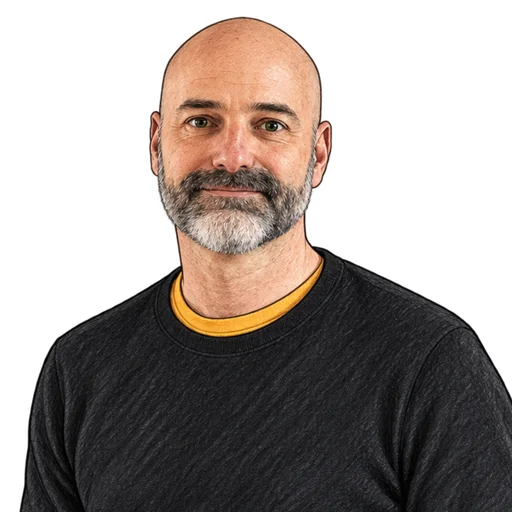
Charlie Boyer
“I got into fertility storage not expecting to be a little bit of an activist, but I've become a little bit of an activist.”— Charlie Boyer
Show notes
Charlie Boyer is not a clinician, and says he is often told that makes him unusual in the US fertility industry. He trained in computer science, worked on large telecoms systems, moved into financial services and became what he calls a serial chief operating officer, before the founder of a cord blood bank brought him in to run the business.
Several years running cord blood storage at Americord taught him that the job comes down to two risks: keeping specimens preserved, and keeping an accurate record of where they are, what the industry calls chain of custody.
Looking for adjacencies in a saturated cord blood market, he met someone who had worked in fertility for decades, and together they co-founded Generations CryoVault, which stores reproductive tissue for patients in the US and around the world. It is the first fertility episode of the show.
Jared frames the conversation as David and Goliath, and Charlie is careful to say he is pro-business and pro-efficiency. His objection is narrower.
Private equity backers need returns well above the market, which drives consolidation, fewer doctors and higher prices, and in US fertility care most patients have no insurance cover and pay out of pocket at the point they are most desperate to have a baby.
In storage specifically, he says he knows the underlying costs: competitors charge $1,300 or $1,400 a year to store tissue that at their scale probably costs $25 to $40, and contracts signed in the middle of treatment make it hard or expensive to move.
One patient who wanted to transfer to his company was quoted over $1,000 just to pack her tissue into a shipper, for what he describes as a 15-minute job. Once he walked her through the steps, she negotiated the fee down.
His answer is the Pricing Promise: Generations CryoVault caps its margin at 15% and shows clients its cost structure in their portal, so prices can rise with costs but should fall as the business grows.
The first question patients ask is what he is sacrificing, so he leans on proof: he says it is the only fertility storage company in the US with ISO 9001 certification, and it publishes its disaster recovery and business continuity plan.
They also discuss why patients who know their treatment in detail rarely think about storage, a customer who arrived because ChatGPT told him to, and why his company has so far been shut out of every employer fertility benefit plan despite charging less. His lesson in hindsight: he ran it like a typical business at first, and would have switched to putting patients first sooner.
Key takeaways
- Charlie Boyer came to fertility with no medical background: computer science, telecoms systems, financial services, years as a chief operating officer, then CEO of a cord blood bank. What carried over was operations, and the two risks at the heart of storage: preserving specimens and keeping an accurate chain of custody.
- In the US, most fertility patients have no insurance cover and pay out of pocket, at the point they are most desperate to have a baby. That, he argues, is what makes consolidation-driven pricing in fertility different from specialties like dermatology.
- He says competitors charge $1,300 to $1,400 a year to store tissue that, at their scale, probably costs $25 to $40. The gap is sustained by contracts signed mid-treatment that restrict where tissue can be stored or charge heavy transfer fees.
- One patient was quoted over $1,000 to pack her tissue into a shipper, for what he describes as a 15-minute job. Once he walked her through the steps, she negotiated the fee down. Patients own their tissue, and knowing that is leverage.
- His Pricing Promise caps Generations CryoVault's margin at 15% and shows clients the cost structure in their portal. Prices can rise with costs, but he expects them to fall as the business grows, because so much of storage is fixed cost.
- Cheaper invites the question of what is being cut. He answers with proof: ISO 9001 certification checked by independent auditors, and a published disaster recovery and business continuity plan.
- Patients are experts on their treatment and barely think about storage. AI search makes information free, but it anchors people on what things do cost rather than what they should cost.
- Jared shares a line from a UK practice leader that Charlie seizes on: when patients are at their most vulnerable, you need to be the least commercial.
See how much revenue your clinic is leaking.
Coherent gives private clinics one patient relationship engine, recovering revenue lost at enquiry, recall and billing.