$400 a Month to 21 Clinics
A physical therapist who turned a $400-a-month room in a repurposed Baltimore church into nineteen clinics, and counting, on why he hires for coachability over credentials, why responsibility and accountability aren't the same word, and why one-on-one care is the one thing he refuses to automate.
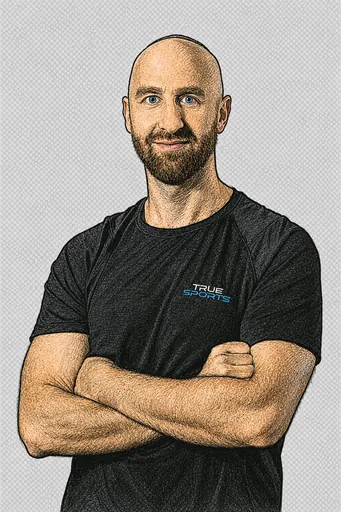
Yoni Rosenblatt
“When you are responsible for something, it is your job to check different boxes. When you are accountable for something, it is your job to get the task completed.”— Yoni Rosenblatt
Show notes
Yoni Rosenblatt is the founder and CEO of True Sports Physical Therapy, a sports-focused physical therapy group that has grown from one room to nineteen locations, with a twentieth and twenty-first already in motion. He started with zero money and a non-compete to work around: he mapped competitors and athlete density on a wall, found a repurposed church in Baltimore, rented a room in the back for $400 a month, and slept there for a year and a half while he built the clinic to be movable in case the whole thing failed. Jared and Yoni open by comparing dentistry's business maturity, a naturally higher-margin specialty in a small footprint, to physical therapy's messier economics, and why PT founders tend to back into ownership rather than plan for it.
Yoni's hiring bar has nothing to do with a resume: he used to require an elite-athlete background from every hire and kept getting burned by it, so he rebuilt the filter around growth mindset and coachability instead. He and Jared discuss the two ways a founder typically ends up with a COO, grown from within or hired once the founder can no longer hold the role themselves, and the outside team of advisors every scaling clinic eventually needs. The sharpest idea in the conversation is Yoni's split between responsibility and accountability: responsibility is checking the boxes assigned to you, accountability is making sure the task actually gets done, whoever is covering for you. It's part of why he still keeps his own caseload years into running nineteen sites: treating patients is the only way he stays exposed to the friction his own operations create.
Asked what he'd fix first in any clinic's operations, Yoni doesn't say marketing. He says accounts receivable, then patient cancellations, in that order. He also credits Jocko Willink's Extreme Ownership for the management math behind his org chart: no one person should manage more than six to eight people well, which is why a nineteen-site business needs layers, not one CEO trying to hold every direct report personally. The conversation closes on where Yoni draws a hard line on automation: he strips hot packs, cold packs, and exercise technicians out of his own clinics on purpose, because every task he hands off is a minute stolen from the one-on-one session he considers True Sports' real product, and because every patient's pathology is specific enough that a rule an AI learns from one case won't reliably hold for the next.
Key takeaways
- Growth mindset and coachability beat CV, pedigree, and years of experience. Yoni used to require an elite-athlete background from every hire and kept getting burned by it.
- A clinic that only works because one person is running it has a hard ceiling, and it's exactly the risk PE buyers and consolidators flag first when they look at single-practitioner exposure.
- Responsibility and accountability aren't the same thing. Responsibility is checking boxes. Accountability is making sure the task actually gets done, whoever is covering.
- No one person can manage more than six to eight people well. Yoni credits Jocko Willink's Extreme Ownership for the management layers built into True Sports' org chart.
- Asked what he'd fix first in clinic operations, Yoni skips marketing. Accounts receivable comes first, patient cancellations second.
- Healthcare still doesn't have its own version of customer support the way airlines or software do, despite being a massive share of the economy.
- He strips hot packs, cold packs, and exercise technicians out of his own clinics on purpose, because every task handed off is a minute stolen from the one-on-one session he's protecting.
See how much revenue your clinic is leaking.
Coherent gives private clinics one patient relationship engine, recovering revenue lost at enquiry, recall and billing.