Prison PT to 160-Clinic CEO
Richard Leaver has treated patients inside the NHS, high-security prisons, and hospitals before spending a decade in US private-equity-backed physical therapy. He explains the exact order compliance, quality, and financials have to come in, and why the biggest constraint on AI adoption in healthcare is people, not the technology.
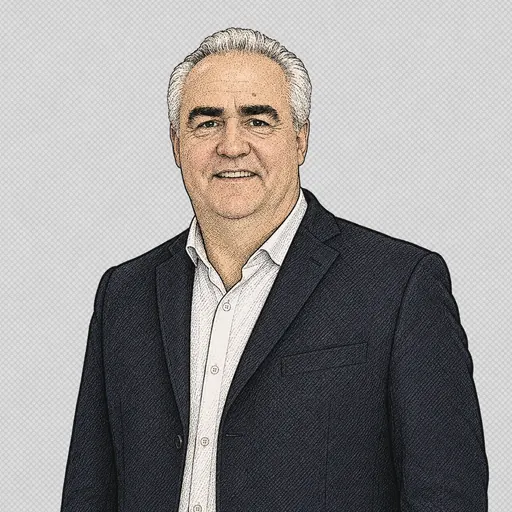
Richard Leaver
“We have the technology to automate probably ninety percent of tasks, but we can't do it because of the human side.”— Richard Leaver
Show notes
Richard Leaver trained and worked as a physiotherapist in England, including inside the National Health Service, before moving to the US 25 years ago. Since then he has practiced in nearly every healthcare setting imaginable, from high-security prisons and physician-owned practices to magnet-status hospitals, and spent over a decade on the private-equity side of outpatient physical therapy before joining Alliance Physical Therapy Partners as a startup roughly nine years ago. Alliance is now a national outpatient therapy provider running about 160 clinics across 18 states and seeing close to 1.5 million visits a year.
Richard's operating principle is "compliant quality care in a fiscally responsible manner," and he insists the order matters: compliance first, because without it you don't have an open business; quality second, because without it patients don't come back; financials only after both are right. He also contrasts the NHS, free at the point of use and philosophically built around individual responsibility to a shared system, with the for-profit US private-equity model, half-jokingly "socialist" versus "capitalist," while maintaining that the clinical principles behind good care are identical in both.
Much of the conversation turns to technology and AI. Richard argues the constraint on scaling isn't technical capability, Alliance believes it could automate close to 90% of tasks, but human and cultural adoption: only about 20% of clinicians use a home-exercise-program tool that clearly saves them time, and fewer than 10% use an in-house AI voice-documentation tool. Patients, meanwhile, have adapted faster than expected, often preferring a virtual front desk to checking in with a person nearby. Looking a decade out, Richard's bet is that hands-on clinical care won't change, but how care gets reimbursed in the US has to.
Key takeaways
- Worked as a physiotherapist across NHS hospitals, industry, physician-owned practices, and high-security prisons before spending over a decade in US private-equity-backed outpatient care.
- Joined Alliance Physical Therapy Partners as a startup nine years ago. It now runs about 160 clinics across 18 states and sees roughly 1.5 million visits a year.
- His mantra: "compliant quality care in a fiscally responsible manner." Compliance first, quality second, financials only once both of those are right.
- The constraint on scaling isn't the technology. Alliance believes it could technically automate close to 90% of tasks; adoption is slowed by people, not tools.
- Only about 20% of clinicians use the home-exercise-program tool that saves them time, and fewer than 10% use the in-house AI voice-documentation tool.
- Patients have adjusted faster than clinicians. Alliance's virtual front desk is now often preferred over checking in with a person standing nearby.
- His prediction for the next decade: hands-on clinical care won't change, but how care gets reimbursed in the US has to.
See how much revenue your clinic is leaking.
Coherent gives private clinics one patient relationship engine, recovering revenue lost at enquiry, recall and billing.