AI Said You're Booked. Does the Appointment Exist?
Adhira Tippur and Sanjana Kavula, co-founders of Kairos Health, on building AI voice agents for dental front desks: why the workflow matters more than the model, four signs a practice is ready for AI, who carries the risk when it gets something wrong, and why knowing when not to act matters.
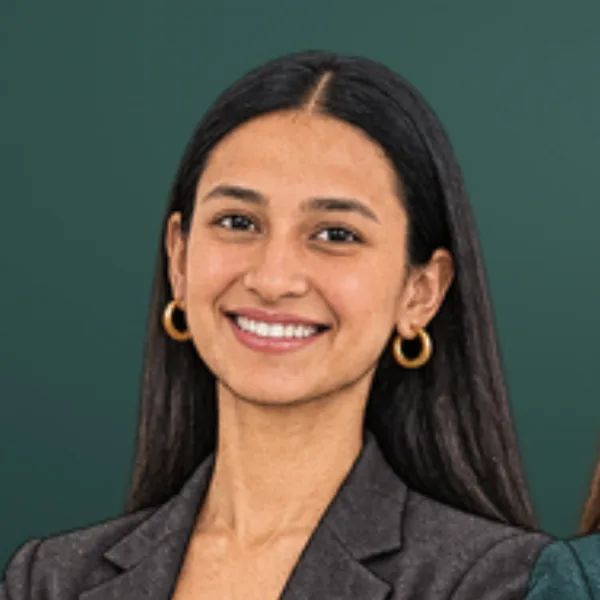
Adhira Tippur

Sanjana Kavula
“In healthcare, I think just knowing when not to act is just as important as knowing how to act.”Adhira Tippur
Show notes
The Business of a Clinic usually hears from people who run clinics, but this episode brings two founders from the technology side. Adhira Tippur and Sanjana Kavula co-founded Kairos Health, which builds AI voice agents that answer and make calls for dental practices in the US. They met in the back of an ambulance during their first week at Rice University, both working a 24-hour shift as EMTs.
The idea came from Adhira's childhood. Her mother is a general dentist with several practices in Texas's Rio Grande Valley, and Adhira grew up helping at the front desk, where staff answered phones, checked patients in, dealt with insurance and followed up with patients who hadn't come back, often all at once.
When the pair spoke to other dentists, they heard the same story: the practices had demand, but not the admin capacity to capture it.
Sanjana argues that healthcare is innately human, but patient access can be improved with technology. In her view, the difference between useful AI and what she calls AI slop is how well the workflow is understood.
The founders spent months learning front-desk workflows as a person would, and each onboarding maps a clinic's own call scripts and scheduling rules into a decision tree. Jared, who used to run a clinic, says a one-click install would be a red flag for him, much like hiring someone in one click.
Adhira sets out four signs a practice is ready for AI: be clear about the problem you are solving, have someone internally who owns the workflow (often the office manager or a long-serving receptionist rather than the dentist), be willing to adjust and document your rules, and measure success against a baseline.
Jared pushes on the human cost of putting AI between patients and the practice. The founders describe safeguards that detect pain, emergencies or frustration and pass the call to a person.
The conversation turns to risk. Jared draws on an earlier episode about AI's missing safety standards and asks who carries the liability when AI gets something wrong. Sanjana predicts it will usually fall on the clinic that adopts the tool, as long as the vendor has done its due diligence, though she calls it a nuanced debate.
Adhira describes the moments the product improved: moving from a natural-sounding conversation to bookings that actually appear in the practice management system, and teaching the AI to recognise its own limits.
Jared offers a two-by-two of reliability and impact. Adhira's answer is to set different standards for different tasks. A call that ends with a transfer to the front desk is acceptable; an invented appointment or wrong clinical information is not.
The founders close with the highs and lows: a patient who arrived asking where Kira, the AI, was, and clinics whose workflows had too many complex clinical edge cases for the AI to handle well.
Key takeaways
- Start with the problem, not the technology. Missed calls, unscheduled treatment and an overwhelmed front desk need different fixes.
- Name an internal owner. The person who knows the workflow best is often the office manager or a long-serving receptionist.
- Document your own rules first. AI exposes scheduling rules that were never written down or are handled differently by each person.
- Measure against a baseline. Track missed calls or reactivated patients before and after, so you know whether anything changed.
- Be wary of one-click set-up. Mapping a clinic's workflows takes time, much like training a new hire.
- Set reliability standards by task. Outreach to overdue patients can tolerate more misses than booking directly into the diary.
- A handover is not a failure. Passing a call to a person is fine; an invented appointment or wrong clinical information is not.
- Patients still need a way to reach a person, especially when they are in pain or worried.
A five-star patient experience, outside your clinic doors.
Coherent handles patient outreach and incoming enquiries across WhatsApp, SMS, email and calls. From bookings and reminders to follow-ups, keep patients supported between visits across your clinics, so your team can focus on the people in front of them.

